

Welcome back to the second edition of Common Corpus, our weekly curation of the best evidence-based women’s health content designed to help you navigate, optimize, and advocate for your well-being at every stage of life.
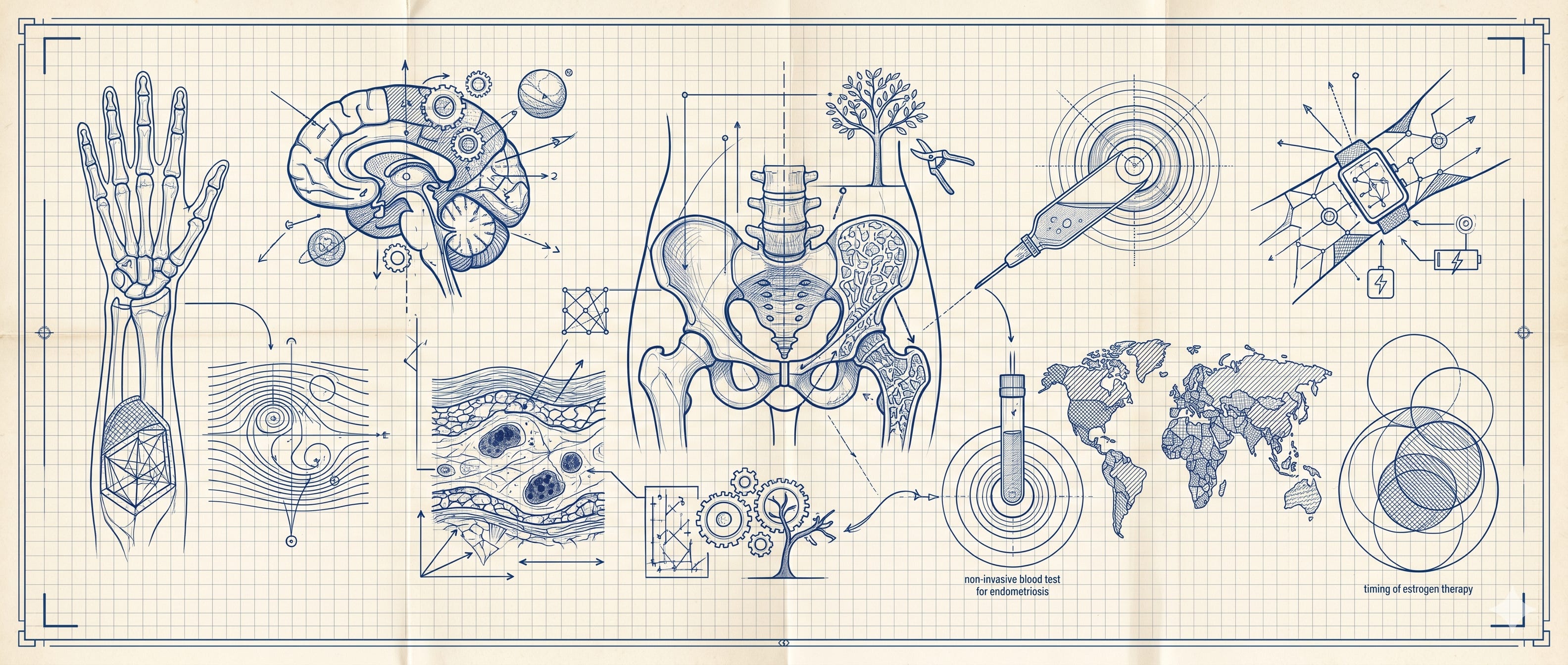
This week, we are covering a wide range of transformative research and expert insights, including how pregnancy physically reshapes the brain to prepare for motherhood, a promising new blood test that could drastically shorten the wait for an endometriosis diagnosis, and why the specific timing of estrogen therapy might be the key to maximizing its protective benefits. We also dive deep into actionable strategies to safeguard your bone density and cognitive longevity, look at a sobering update on the global crisis of violence against women, and share a few practical tools—from a new perimenopause wearable to the anatomical secret behind a viral push-up hack.
Thank you for joining us again. We hope you find this week’s resources insightful, useful, and empowering as you navigate your own health journey.
And if you want to learn more about what Common Corpus is, and why we do what we do, please visit our About page.
News & Noteworthy
What’s making the news in women’s health
Women’s brains shed grey matter in preparation for motherhood
Pregnancy literally rewires the brain, shedding grey matter to foster a more efficient maternal instinct and attachment.
• A new study tracking women before, during, and after pregnancy reveals that the brain loses an average of nearly 5% of its grey matter volume during pregnancy.
• Rather than a cognitive deficit, researchers liken this process to “pruning a tree”—eliminating unnecessary neural connections, and seem to allow women to bond better with their babies.
• The loss of grey matter during pregnancy and the subsequent recovery of most of it in the postpartum period tracks with fluctuations in estrogen levels.
The takeaway: This research reframes the trope of “baby brain” — rather than being indicative of mental decline, this neurological remodeling is an incredible, adaptive upgrade designed to biologically prime women for motherhood. Better understanding these changes could also lay the groundwork for better tailoring mental health support for new mothers.
New biomarkers could enable much earlier and easier diagnosis of endometriosis
Researchers have discovered a new microRNA signature that could lead to a non-invasive blood test for detecting endometriosis in its earliest stages.
• Researchers have identified novel molecular biomarkers (microRNAs) circulating in the blood of adolescents and young adults that accurately flag the presence of early-stage endometriosis.
• Because the current gold standard for diagnosis is invasive laparoscopic surgery, patients often endure a delay of eight to ten years (or up to 14 years for adolescents) before receiving an official diagnosis.
• Detecting the disease through a simple blood draw would allow for earlier diagnosis and treatment, decreasing the risk of irreversible damage or severe chronic symptoms.
The takeaway: This breakthrough provides much-needed validation for young women whose pelvic pain is frequently dismissed or normalized. Diagnosing endometriosis in adolescence via a simple blood test will dramatically shift the timeline of care, protecting future fertility and saving patients from years of misdiagnosis and debilitating pain.
The Latest Research
The latest in academic research in women’s health
RSV vaccine during pregnancy
A UK-based study in The Lancet Child & Adolescent Health provides strong real-world evidence that getting an RSV vaccine during pregnancy is a highly effective way to protect newborns from severe respiratory infections. The research found that maternal vaccination was 72% effective in preventing RSV-related hospitalization in infants. This is a crucial finding for expectant parents, as RSV is a leading cause of hospitalization in babies during their most vulnerable first few months of life. LINK
The timing of estrogen therapy may be key to reaping many of its benefits
A large-scale analysis of over 120 million patient records suggests that initiating estrogen therapy during perimenopause is associated with significantly better health outcomes than starting it later in life. Researchers found that perimenopausal women who started estrogen within 10 years prior to menopause showed no significantly higher associated rates of major adverse events, specifically breast cancer, heart attack, and stroke, compared to non-users. In fact, these women had roughly 60% lower odds of developing breast cancer, heart attack, and stroke compared to those who started estrogen therapy after menopause or those who had never taken estrogen therapy at all. While the results do not establish causality, the analysis suggests that earlier initiation of estrogen therapy during this transitional period could be key to minimizing cardiovascular and breast cancer risks and maximizing potential long-term benefits for heart and bone health. LINK
Listen & Learn
The latest in women’s health audio content worth your time
The hard reality of bone health with Dr Vonda Wright
Orthopaedic sports surgeon Dr. Vonda Wright delivers a masterclass on why our bones are dynamic, living endocrine organs rather than just structural scaffolding. She explains why bone health should be something all girls and women, at any stage of life should be proactively thinking about as part of their broader health. Bone mineral density is primarily laid down during adolescence, with peak bone strength achieved by age 25-30 years old. For younger girls and women, this is the window to establish peak bone strength that will shape what bone loss means for women later in life. For women navigating hormonal transitions —from pregnancy to menopause—understanding bone health is essential because these stages can dramatically accelerate bone loss. This episode matters to anyone looking to maintain their independence as they age, highlighting the devastating impact of osteoporosis-related fractures. Dr. Wright breaks down actionable strategies to build and preserve bone density. While being proactive about bone health in our 20s, 30s, and beyond, is key to ensuring we stay strong, mobile, and fracture-free as we age, she also argues that it is never too late to benefit from these strategies to take care of your bones.
What every woman must know to prevent Alzheimer’s with Dr Lisa Mosconi
Neuroscientist Dr. Lisa Mosconi argues that Alzheimer’s is a disease of midlife. She breaks down the crucial link between menopause and brain health, explaining how women can proactively protect their cognitive longevity. This conversation is essential listening for women in their 30s, 40s, and beyond who are navigating or approaching the hormonal shifts of midlife. Dr. Mosconi explains how fluctuating estrogen levels during perimenopause precipitate changes to the brain. She discusses the complex role of hormones and menopause hormone therapy as a protective tool for cognitive health, and the science of neuro-nutrition and exercise to support our brains as we age. Fundamentally, she challenges the fear around the inevitability of cognitive decline and Alzheimer’s — a disease that disproportionately affects women 2 to 1 — by laying out evidence-based strategies aimed at preventing or delaying the disease.
The Global Perspective
Women’s health around the world
Violence against women remains a persistent global health crisis
A sobering WHO report estimates that 840 million women—nearly 1 in 3 globally—have faced physical or sexual violence, a figure that has remained virtually unchanged for the last two decades. The stagnation of this statistic indicates a systemic failure to protect women despite increased awareness. The WHO argues this violence not just as a social issue but a chronic health emergency that requires urgent, sustained funding and structural change, not just rhetoric.
Common Interest
Quick hits that we found interesting, thought-provoking, or useful this week
The anatomy of a viral push-up hack for women explained… It’s all about your pelvis, and it has important implications for a lot more than push-ups. LINK
Peri, a new wearable device, aims to help women track changes around perimenopause, make sense of their symptoms and help them advocate for themselves in seeking treatment. LINK
A guide to evaluating online information on menopause, and some solid principles for weighing online health information more generally: LINK